
Why the Hexafarm grows four things at once
Seaweed above, shellfish in the middle, lobster on the floor, fish in between. Polyculture is not a marketing word here — each layer does a job the others need.
Conventional fish farming puts one species in a net and feeds it. The waste sinks, the oxygen drops, biofouling clogs the mesh, and someone has to keep cleaning it. Every one of those is a cost, and two of them are also the reason sea-cage aquaculture has the environmental reputation it has.
The Hexafarm's answer is to stop growing one thing.
Four layers, each doing a job
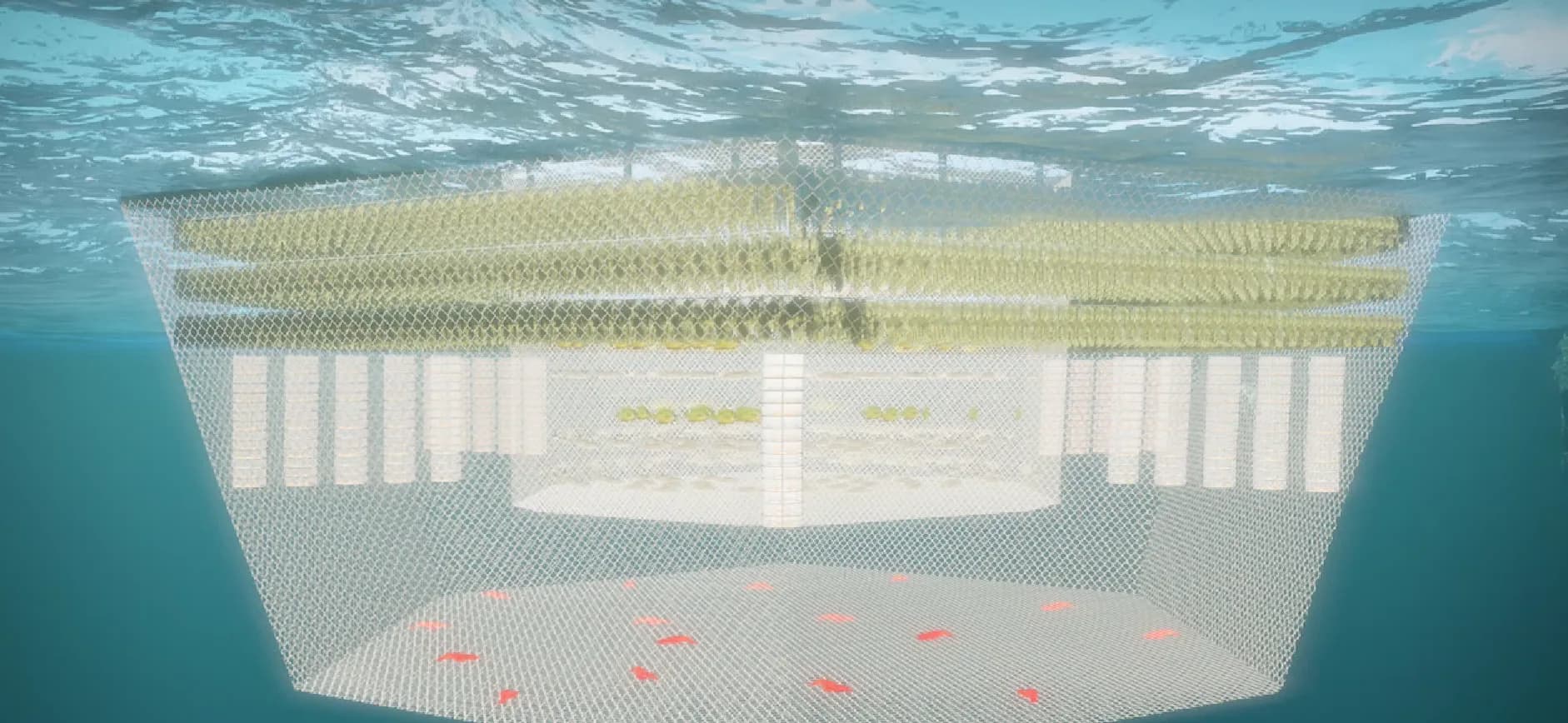
Look at the cutaway above and you can see the whole argument in one frame.
Seaweed, in lines near the surface. Seaweed production raises the oxygen concentration in the water, which leads to healthier fish. It is also a crop in its own right.
Shellfish, in hanging baskets. Shellfish are filter feeders. They decrease the amount of waste in the water — the waste being, largely, what the fish below them produce.
Fish, in the central cage. The reason the farm exists.
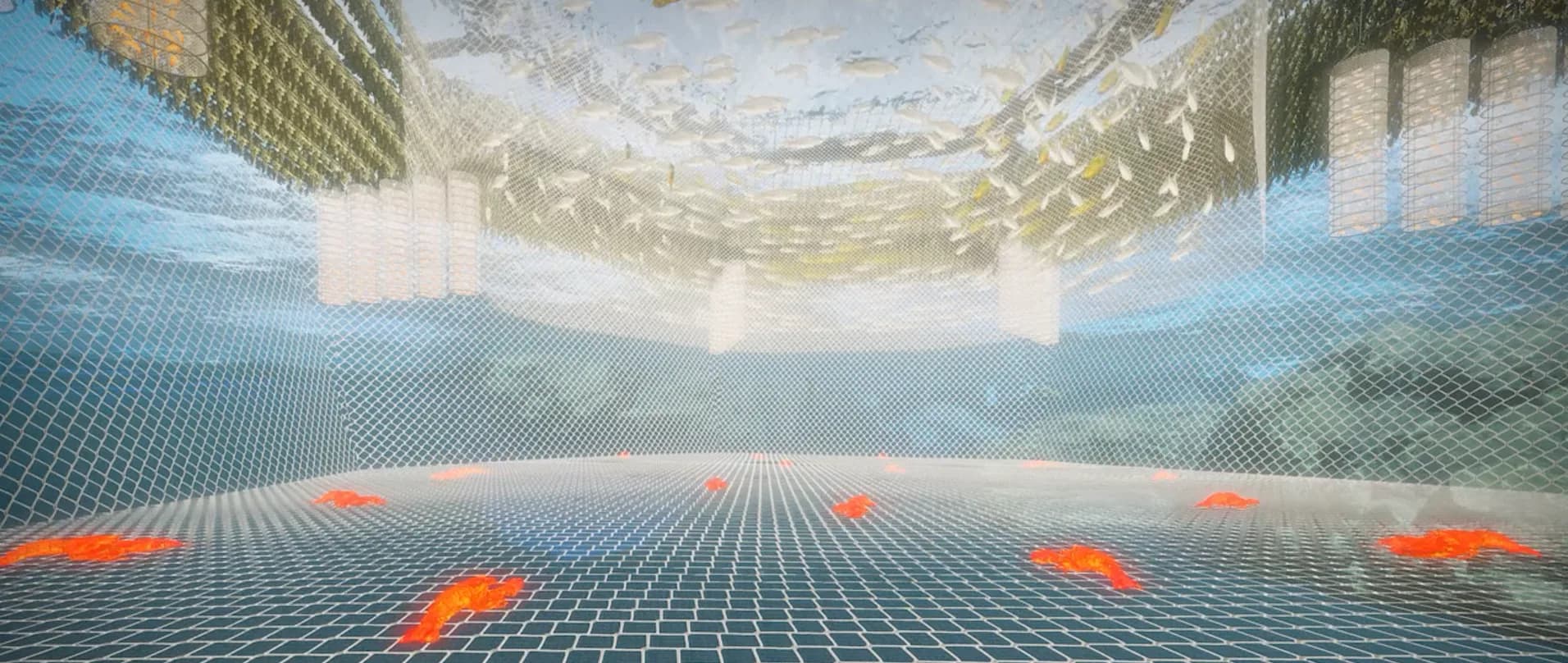
Lobster and siganids, in the outer net. These control biofouling. Siganids (rabbitfish) graze algae; the lobster work the floor. What would otherwise be a maintenance cost becomes two more things you can sell.
That is what polyculture means here. It is not four separate farms sharing a mooring — each layer consumes something another layer produces, which is why the system claims better fish health, higher output and better overall efficiency than a single-species cage of the same size.
Built to be assembled by people who are already there
The structural choices are aimed at the same problem from the other end.
The Hexafarm is made from high-density polyethylene, which ArkPad states will last about 50 years in salt water. It ships in small modular parts and is fitted together on site. Critically, the design eliminates butt-welding — the joining method that would otherwise require specialist technicians and specialist equipment on a remote coastline.
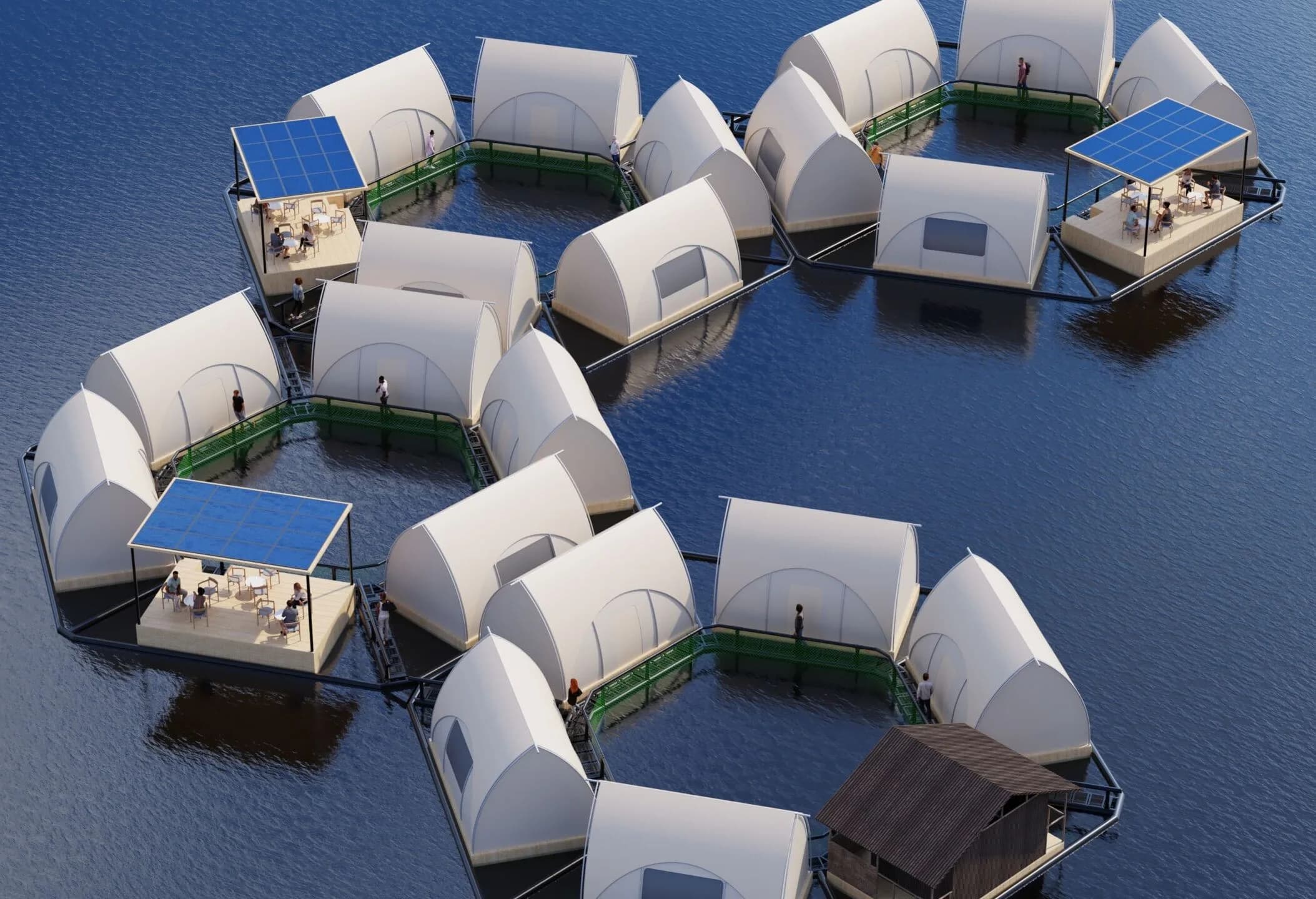
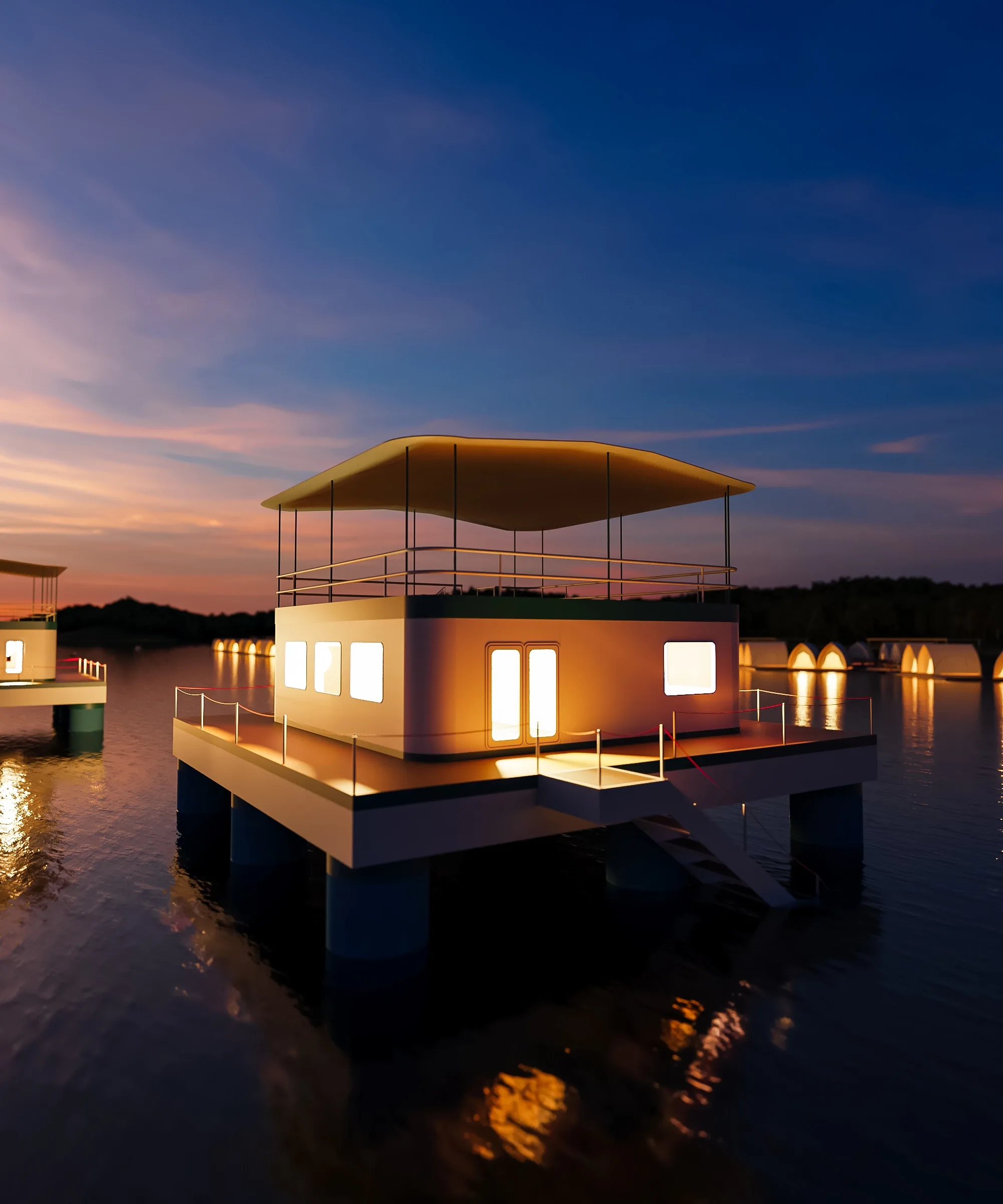
Take that requirement away and a farm can be built where it is going to float, by the workforce already living there. Hexafarms are fully walkable, they interconnect, and between six and twelve floating rooms can be integrated into them — which is exactly how the Reef Resort ended up being a resort sitting on a fish farm rather than next to one.
What is not yet published
The mechanism above is well documented. The measured results are not.
There is no published dissolved-oxygen data with and without the seaweed layer, no waste-load figures from the operating farm, no stocking densities and no harvest volumes. All of that presumably exists somewhere in an operator's notebook, and any of it would turn a well-argued design into demonstrated performance.
Talk to us
Something here you want to ask about?
Questions about anything in this post, a figure you would like sourced, or something you think is worth writing up — send it over.